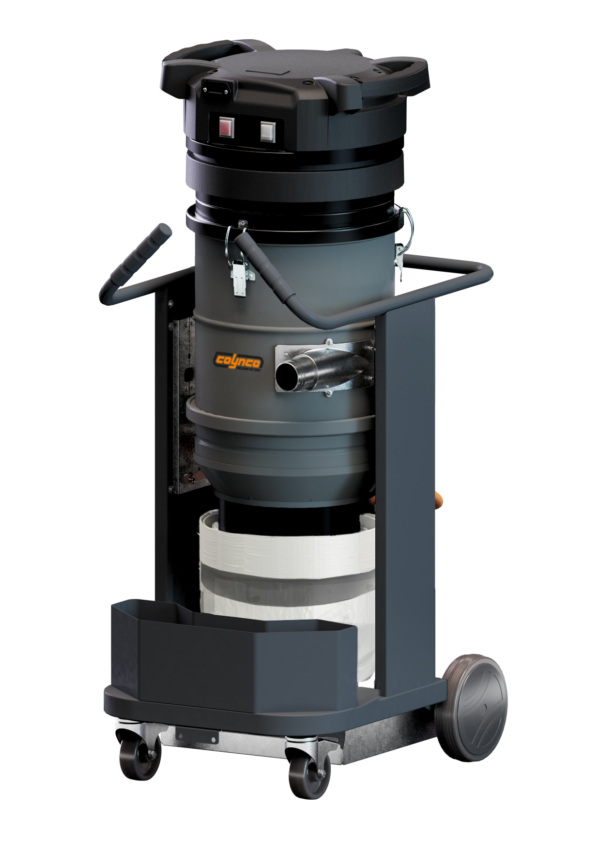
Industrial Vacuum Systems for 3D Printers and Additive Manufacturing
Additive Manufacturing and 3D Printing
Have revolutionized numerous industrial sectors, offering innovative solutions for production and design. However, these technologies come with challenges related to dust management and cleaning. During the 3D printing process, a significant amount of dust and debris is generated, especially when working with materials such as plastics, metals, and nylon. These residues can compromise print quality, damage equipment, and pose risks to worker health and safety. Therefore, the use of industrial vacuum systems specifically designed for 3D printing and additive manufacturing becomes essential to ensure high-quality standards and safety throughout every stage of production.
Ensuring Optimal Quality Standards
3D printing delivers excellent quality standards, sometimes surpassing those of traditional manufacturing processes. Industrial vacuum systems are ideal tools for maintaining the cleanliness and functionality of 3D printers, ensuring their longevity. Additive manufacturing often involves the use of various composites, including plastics, metals, ceramics, and nylon. Given the diversity of materials in additive manufacturing, selecting the appropriate industrial vacuum system is crucial.
High precision is required not only in the manufacturing of parts but also in maintaining a clean working environment. As a result, industrial vacuum systems are indispensable. In the additive manufacturing sector, the most widely used 3D printing technologies include Stereolithography (SLA), Fused Deposition Modeling (FDM), and Selective Laser Sintering (SLS). For instance, in SLS technology, objects and prototypes are created within chambers filled with sand or powders. Industrial vacuum systems are essential to prevent product contamination between production cycles.
The powder or sand used in 3D printers must often be recycled for future production cycles. Therefore, an industrial vacuum must effectively collect all residues. Depending on the technology used, residues can be generated at various stages, including printing, post-processing, and finishing. Industrial vacuums are thus employed to clean 3D printers, finished products, and surrounding workspaces, ensuring worker safety and cleanliness.
In additive manufacturing, vacuum systems are essential for preventing contamination, reducing operational costs, and minimizing material waste. Materials used in this sector fall into three main categories:
Non-Combustible and Non-Conductive Additive Powders
For these materials, the powder poses no significant risk to the operator. Compact industrial vacuums equipped with filters tailored to the specific type and granularity of the powder are sufficient.
Non-Combustible and Conductive Additive Powders
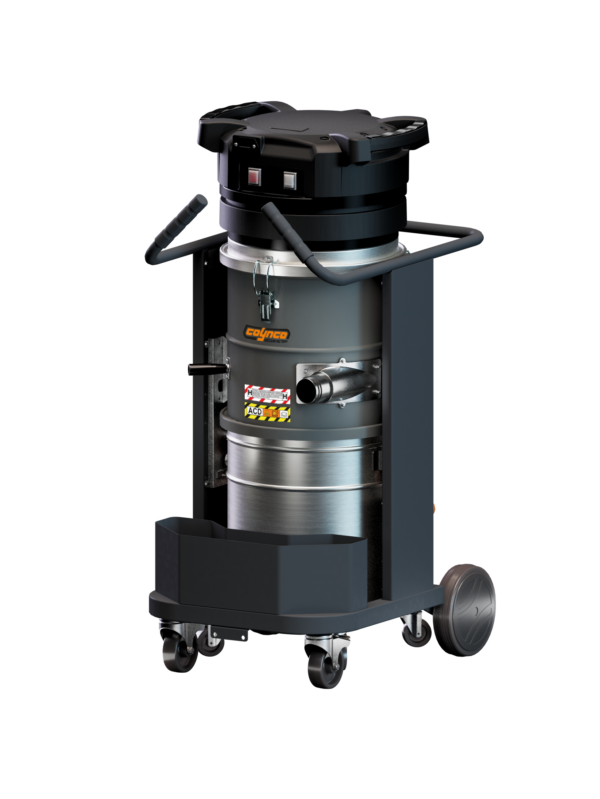
This category requires ATEX-certified industrial vacuums (Category 3D), designed for operation in explosion-prone environments. Coynco manufactures ATEX-compliant vacuums with antistatic or conductive filters, collection tanks, and filter chambers made of AISI 304 stainless steel as standard. This ensures complete safety by grounding potential static electricity. Additionally, all Coynco ATEX vacuums can be certified for Zone 20 internal use, thanks to their stainless steel filter chambers.
Combustible and Conductive Additive Powders
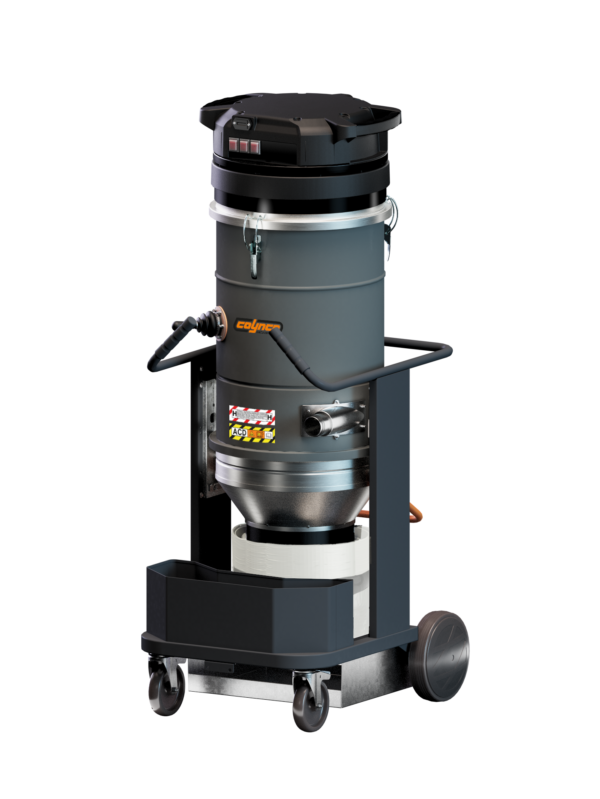
For this category, Coynco offers ATEX-certified vacuums equipped with a collection system that immerses the powders in an inert liquid, such as paraffin oil. This approach neutralizes the powders immediately upon contact with the liquid.
In a sector where flexibility and adaptability are crucial, industrial vacuums for 3D printing do not require extraordinary power but demand precise and specific technologies. Key considerations include the need for HEPA filters capable of capturing up to 99.95% of dust particles, appropriate motorization, and, in some cases, compliance with ATEX regulations.
The integration of suitable industrial vacuum systems into the 3D printing and additive manufacturing sector is critical for maintaining operational efficiency, cleanliness, and safety. These systems ensure print quality by effectively removing residues, protect operator health, and extend the lifespan of equipment. Careful selection of the right vacuum system, based on the materials used and the specific needs of the production process, along with regular maintenance, is key to maximizing the benefits of these essential tools. With the right equipment and attention, industrial vacuums will remain an indispensable ally in the dynamic evolution of 3D printing and additive manufacturing.